The wide variety of geophysical methods can be applied across numerous sectors. We are not only considering large-scale industrial and agricultural investments here, but even smaller-scale research. Examples include studies that can help determine the location for a well in a family home’s garden. A homeowner looking for a cost-effective solution for garden irrigation or drinking water supply does not simply drill "somewhere in the garden" but makes an informed decision in designating the drilling location. This is especially true if the garden lies in a geologically complex area.
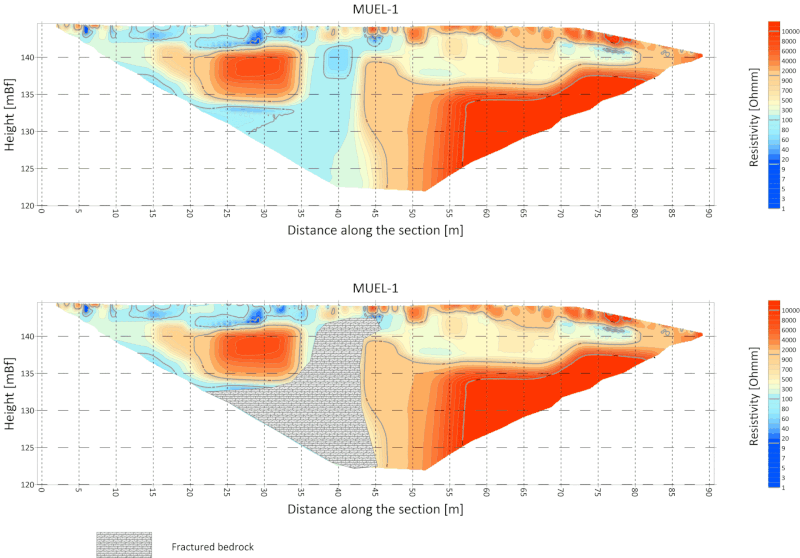
Our latest client did just that, whose yard has heterogeneous geological formations of various properties beneath its surface. We traveled to the stone fields of the Balaton Uplands, where, with non-invasive, multi-electrode tomography measurements, we succeeded in identifying the zone where a well, drilled with the highest probability, would reach a water-bearing layer with favorable properties. During the measurement, we conducted quasi-stationary current into the ground, and by measuring the voltage differences along the installed cable system, the distribution of the specific electrical resistivity of the soil as a function of depth could be determined. As a result, it became clearly visible that within a few meters of drilling, we could reach either solid bedrock or water-bearing layers. We completed the measurements in a single fieldwork day, significantly saving costs for our client. Following the well’s official approval by the authorities, we trust that our work has helped make a satisfied client's garden greener!

