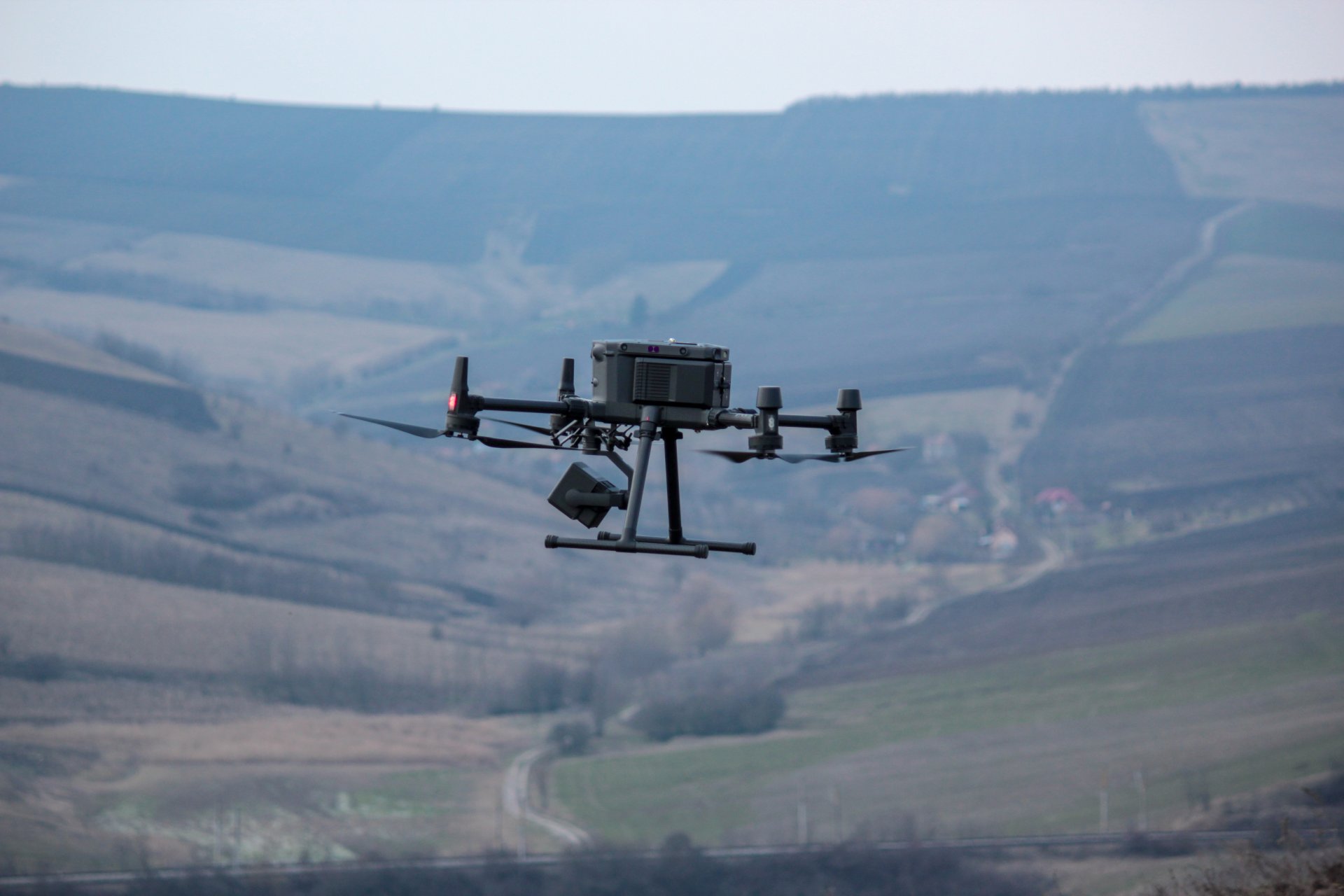
The laser scanner (LiDAR) emits laser beams that reflect when they reach the surface or objects being examined. The system measures the time interval between emitted and returning laser pulses with high precision, allowing the distance of the given object from the LiDAR to be calculated.
By repeating this process many times, a detailed point cloud is created, which provides a three-dimensional image of the surveyed area.
The system also uses GPS and IMU (inertial measurement unit) for precise positioning, so every surveyed point has accurate coordinates. Digital terrain or surface models can be created from point clouds generated with LiDAR.
Application areas:
- Construction and engineering surveys
- Environmental monitoring and management
- Urban planning and infrastructure development
- Mining surveys
- Solar park planning and inspection
- Agricultural surveys
- Archaeology and cultural heritage
- Land and property management
- Forest and wildlife management
Advantages:
- Applicable also for mapping vegetation-covered areas
- Applicable in weaker lighting conditions compared to photogrammetry
- High-precision mapping of the surface