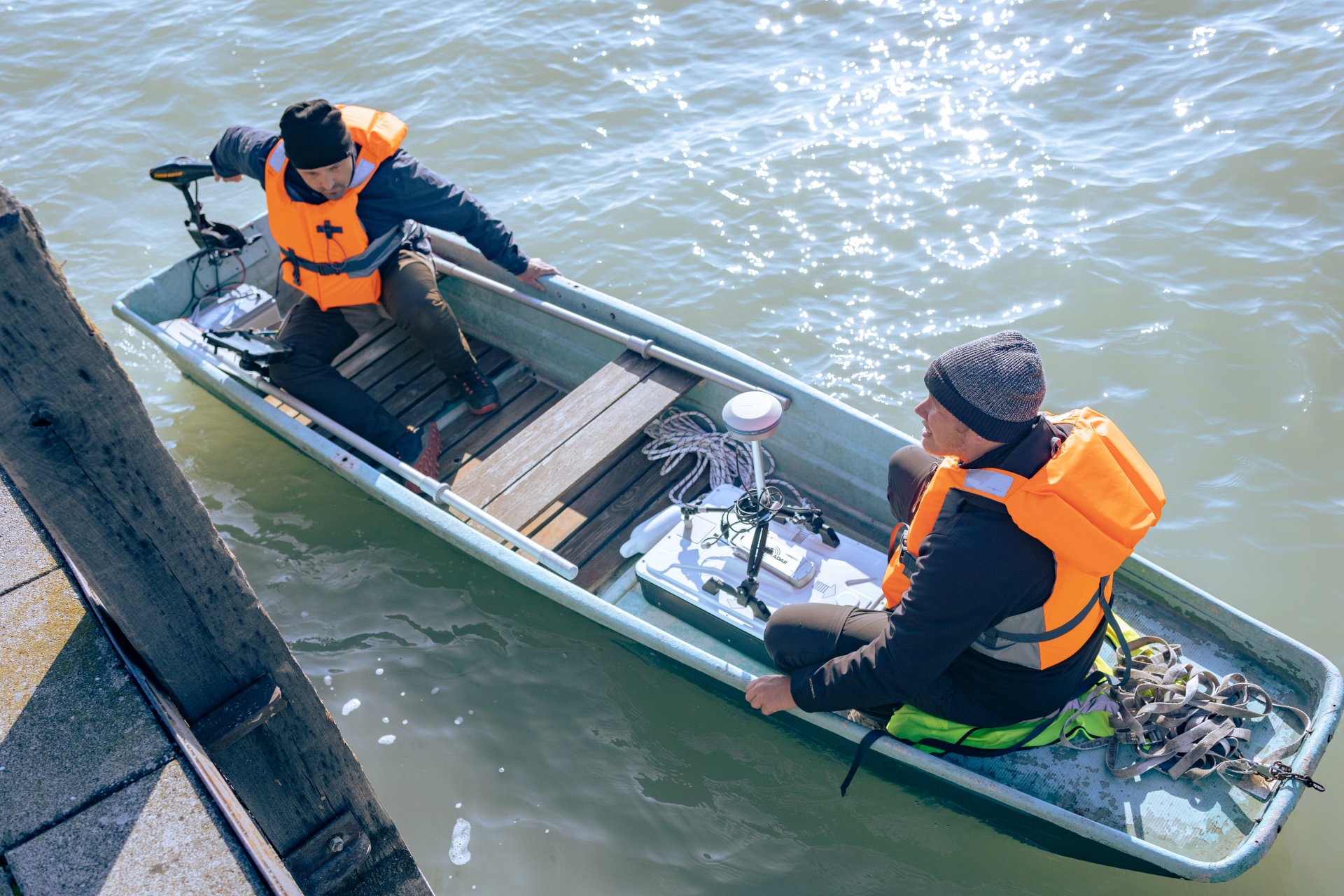
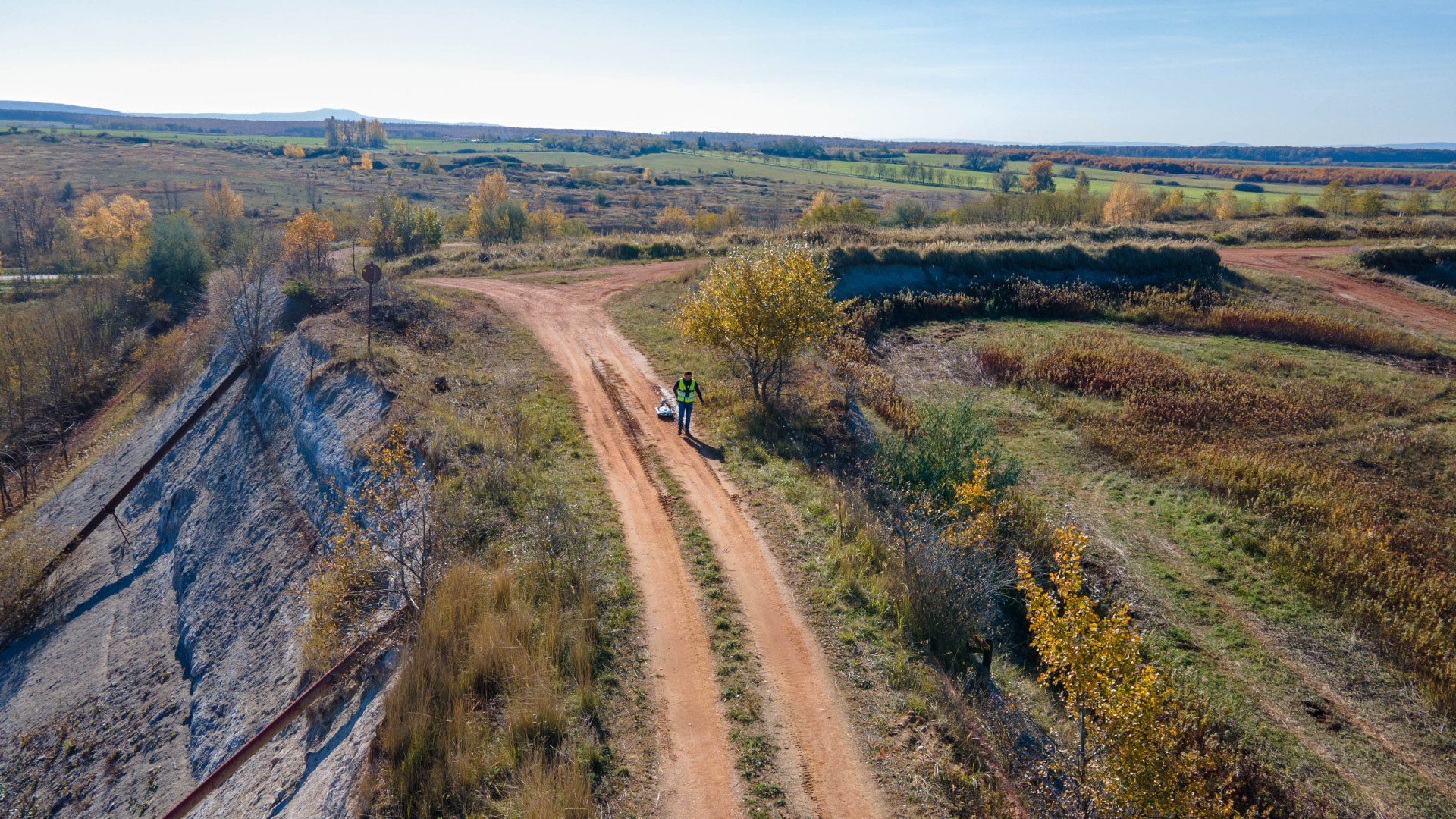
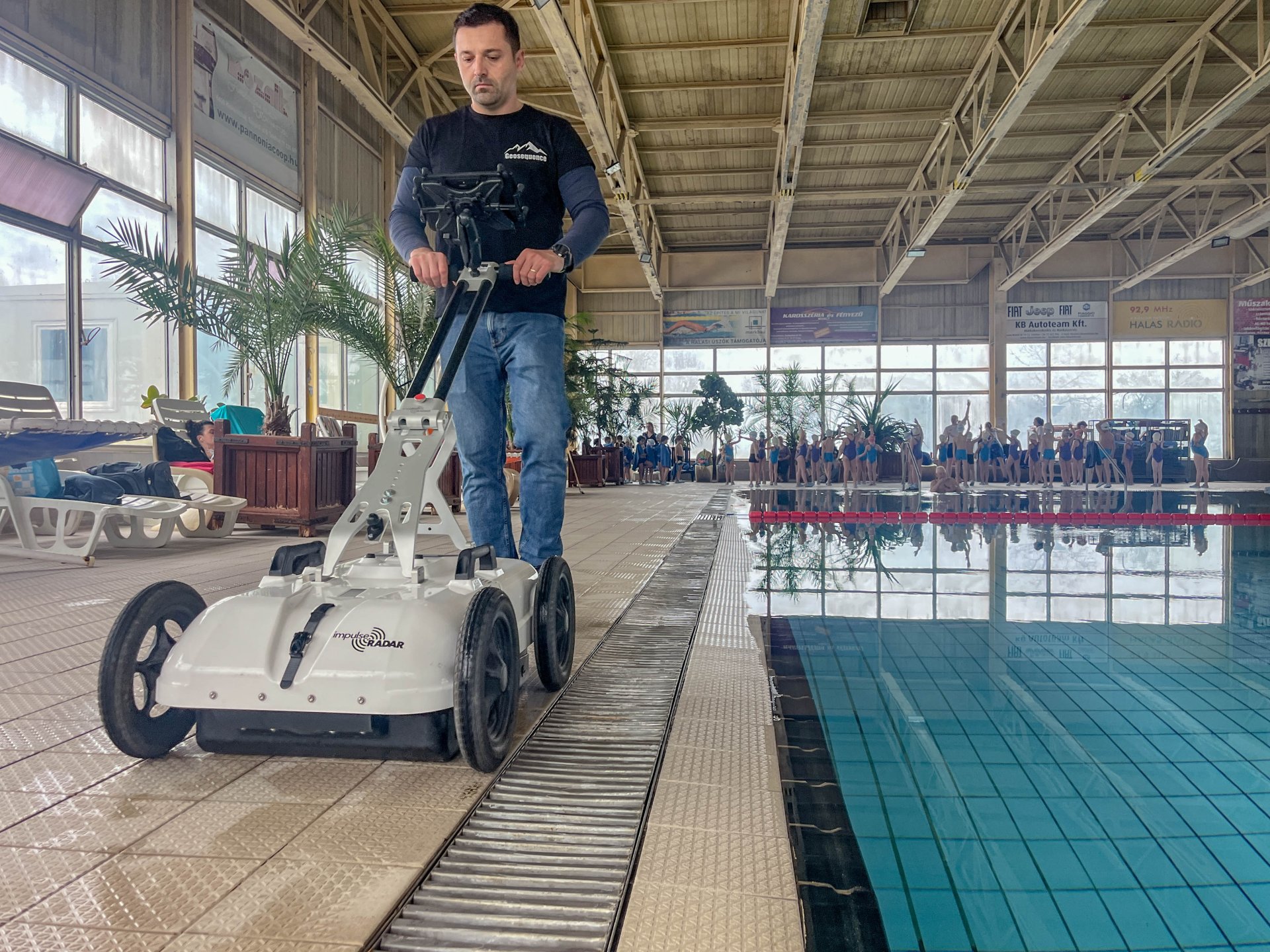
GPR (Ground Penetrating Radar), also known as Georadar, is a widely used research method in geophysics. During the measurement, electromagnetic waves (RADAR) are transmitted into the ground, and the time of the reflections and the amplitude of the incoming reflections generated during the propagation of these wave packets are measured.
The existence and magnitude of reflections are a function of the electrical impedance contrast of the subsurface materials. The propagation speed of the electromagnetic wave in a given medium is related to the electrical properties of that medium. During the measurement, individual radargrams (recorded wave packets) are displayed sequentially in time and space. The result is a 2-dimensional radar profile. In general, the frequency range used during GPR measurements extends from ~40 MHz to 3.5 GHz, and its precise determination depends on the specific research objective. The higher the frequency used, the more our resolution increases, meaning we can distinguish smaller changes/objects on the radar profile.
However, it is important to note that as the frequency increases, the penetration depth also decreases.
Application areas:
- Cavity detection, crack and leak detection
- Tank detection
- Utility mapping
- Road condition mapping
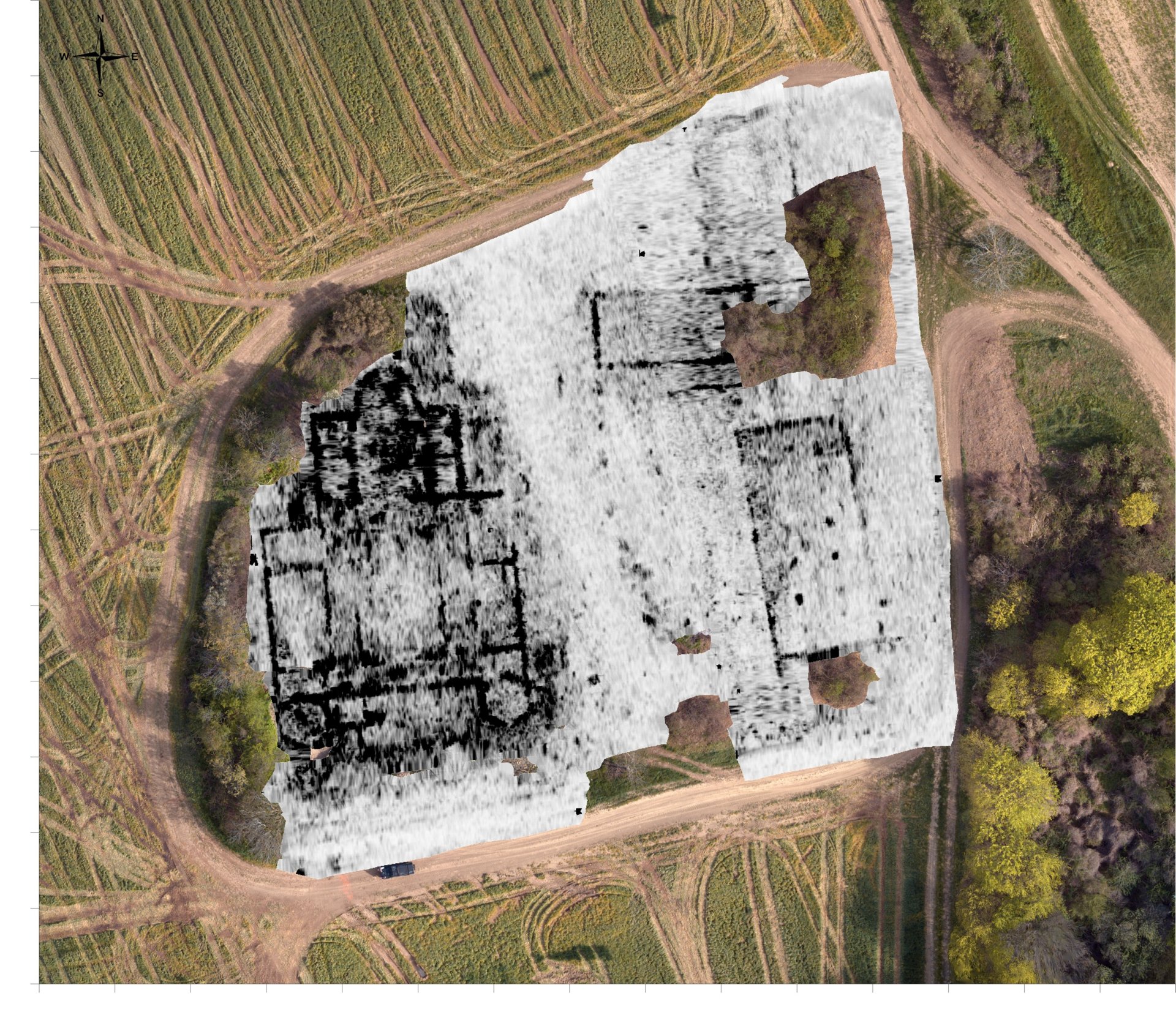
- Archaeological surveys
Advantages:
- Non-destructive method
- Detailed vertical resolution <0.1m
- Fast data acquisition
- On-site evaluation, rapid decision-making